A new version of the
Android operating system has been in the works at Google for some time, but was finally revealed to the public during the keynote speech at June's
Google I/O conference. Android L, previously known as Android 5, is a major departure for the mobile OS, with a completely redesigned interface, more fluid animations, a renewed focus on improving battery life and, for the first time, compatibility with 64-bit processors.
Android L will go up against
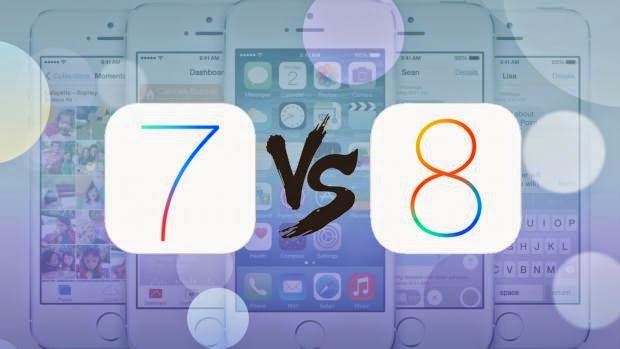
iOS 8, which along with the
iPhone 6 and
iPhone 6 Plus will give Apple devices a major boost. Google won't want to hang around before unveiling its latest operating system and is expected to launch it this autumn.
There have been a lot of announcements following the initial reveal, so we've gathered them all in one place to give you everything you need to know about Android L ahead of its expected release later this year. This article also covers the new Android Wear smartwatch operating system - scroll down to read about the OS you can wear on your wrist.
Release date
Android L is available rigt now, in developer preview form for the Nexus 5 smartphone and Nexus 7 tablet, from developer.android.com. If you're prepared to get your hands dirty, you can even install it on handsets from third party manufacturers; there's already a custom ROM for the HTC One (m7) and others are appearing every day on the XDA Developer forums.
Google isn't yet ready to talk about an official release date yet, as we likely have to wait for a new Nexus device to appear to coincide with its launch. This isn't expected until at least the Autumn, meaning a similar wait for Android TV and Android Auto. For everyone looking to hold onto their smartphone warranty, this means waiting for the official release later in the year.
Android L
Android L was the main event at Google I/O, even if Sundar Pichai avoided giving it a sweet-sounding name. Google has referred to each version of Android by a sweet-flavoured codename based on increasing letters of the alphabet; the original 1.0 version was Apple Pie, followed by Banana bread, Cupcake and Donut as versions 1.1, 1.5 and 1.6. Version 2.0 introduced the world to Eclair, while 2.2 arrived as Froyo. Gingerbread referred to 2.3 and Honeycomb was 3.0, the first version designed with specific support for tablet devices. Android 4.0 was also known as Ice Cream Sandwich and versions 4.1, 4.2 and 4.3 were all known as Jelly Bean.
At this early stage it's unclear whether Android L is the final name, or Google will reveal its actual title a little closer to launch. If the company sticks with L it's a sign that the operating system is maturing, but we're holding out for something a little sweeter. Google was expected to call Android 4.4 Key Lime Pie, but a tie-in with Nestle saw version 4.4 go by KitKat instead. That leaves the door open for other companies to jump on the bandwagon, with Liquorice Allsorts and Lion Bar both suggested.
This seems unlikely though as both are typically only found in Europe. The Lion Bar, also made by Nestle, was only sold in US and Canadian import shops in North America and it would be odd for Google to go with such a little-known brand. The same goes for Liquorice Allsorts. That leaves Android Lollipop or Android Lemon Meringue Pie as the two other rumoured names. The names might be more generic, especially after Android KitKat, but they're both suitably sweet and memorable.
Material Design
Android L reportedly has over 5,000 new APIs ticking away behind the scenes, but the most obvious changes will always be the visual ones. The new Material design scheme is set to appear on every Google platform, not just Android, but it will look best on smartphones and tablets. Apparently Google drew inspiration from pens and inks, with every icon and user interface element casting an accurate shadow to give a sense of depth. Everything animates as you touch it, with objects flying into view and tapped icons rippling like puddles.
The home screen, lock screen, Quick Settings pull-down menu, main settings page and even the onscreen navigation buttons have received a makeover, and Android L will also include new system widgets to match the design scheme. Finally, every Google app will be redesigned to match the new look, with some having already been upgraded in time for the early Developer Preview release following Google I/O.
Certain redesigned apps were teased behind closed at Google I/O, but that hasn't stopped leaked images from appearing online; the highest profile leak so far has revealed a
completely new look for the Play Store, on both tablet and smartphone. Images of a work-in-progress version of the app show a greater focus on images, a simplified layout, more colour coordination and more prominence for film trailers or app/game teaser videos. The leaked images still show Google has some work to do, as detailed content appears to be missing, but it should make it much easier to browse through the expansive Play Store to find what you're looking for once the update arrives.
The notifications system has been completely overhauled for Android L as well. Currently, Android users have to unlock their device to check, respond to or dismiss notifications, but with Android L they will be able to do this from the lock screen. They will appear as a stack of Google Now-like cards, which can be scrolled through rather than flooding the screen. Each one has an in-line preview, giving context.
Features
Android L isn't all about looks; it will also include a new Personalised Unlocking mode. Essentially it makes your smartphone or tablet search for familiar Bluetooth gadgets, Wi-Fi networks, locations and even voice imprints to deactivate any lockscreen protections, letting you jump straight into your phone when it knows you're nearby. If the device can't detect any of these metrics, anyone trying to use it will be presented with the standard lockscreen.
The recent apps page will become the recent content page, displaying all your content in one list of Google Now-styled cards. You'll be able to jump between apps and the web, with links in Google search results jumping straight from the browser into the relevant part of an app. Although not strictly built into Android L, Google will also be giving its mobile webpages and search an overhaul in time for its release. The Material design will be carried across, along with smooth animations and a slicker UI.
Google will be updating its stock Android keyboard for Android L, adding more personalisation features and scrapping the individual tiled keys - instead each letter will sit on a flat background, which should make it easier for those with larger fingers and thumbs to type quickly. Also set to arrive are a Do No Disturb mode, which automatically deactivates all notifications and audio during set times, support for Bluetooth 4.1 and a completely redesigned Audio backend with support for USB audio devices.
Performance
Android L should arrive with plenty of performance improvements as well as visual changes, which should help speed up existing phones as well as make the most of new hardware. The biggest back-end change is the move from the Dalvik runtime to ART. Part of the operating system at a basic level, the ART runtime supports ARM, x86 and MiPS instructions, and a mix of AOT, JIT and interpreted code - essentially Android now speaks a lot more languages and will work on more CPUs than its predecessor. This alone could improve performance by as much as twofold over Dalvik, without developers mking any code adjustments.
DirectX 11-level graphics will finally make their way to Android using the Android extension pack. This set of APIs support advanced effects such as tesselation, geometry shaders, texture compression and compute shaders, and have the potential to put mobile devices on par with games consoles and PC games.
Battery life
Google has concentrated on improving battery life in Android L with Project Volta. Similar to how Jelly Bean's Project Butter was an effort to make animations feel smoother and more responsive, Project Volta includes a new battery historian to better visualise batter discharge, helping users work out what a device was doing at any given point in a battery cycle to find out which apps are draining the most power.
A battery saver mode will be included in stock Android for the first time with Android L, after being a common tweak for third party manufacturers. It will activate automatically when your battery drops below a certain percentage, downclocking the CPU, disabling extra features like location reporting and dimming the display. Google says a Nexus 5 running Android L gets around 90 minutes of extra use over the course of a typical day, without actually changing how a customer uses their phone.
Updates for older phones
Any major Android release will be eagerly anticipated, but it's not much fun being stuck on an outdated version because your phone manufacturer doesn't plan to release an update. Thankfully that shouldn't be the case for HTC and Motorola customers. Right after Google made Android L official, HTC issued a statement confirming the current One (m8) and original One (m7) would be receiving Android L updates "within 90 days of [HTC] receiving final software from Google." A leaked roadmap, posted to
XDA Developers, appears to show plans to add other handsets to this small list, but many are currently marked as "under evaluation" rather than confirmed.
Motorola is apparently planning to upgrade the
Moto X and
Moto G to Android L at some point in the future, although the company has yet to confirm the rumours officially. A user posting to
Android Origin has suggested the Moto E will be left out of the loop, leaving it stuck on Android 4.4 KitKat.
Unfortunately none of the other major manufacturers have made an official statement on which phones will be getting an update to Android L, potentially forcing owners to root their devices and install unofficial custom ROMs to get Google's latest and greatest.
Android Wear
Although Android Wear is an entirely separate platform to Android L, it forms an integral part of the mobile operating system. Naturally it has the same Material design, with matching colours, icons, fonts and animations to Android L. Notifications form the heart of the operating system, appearing as cards which can be swiped through as they appear, swiped away to dismiss and double-tapped to interact with. Notifcations are synchronised with a paired smartphone, so when you dismiss one on an Android Wear device is also disappears from your handset. A Do Not Disturb mode can be acitvated with a single downwards swipe from the top of the screen, for when you don't want notifications to bother you.
There's no need to install apps to an Android Wear device; if an app works with Android Wear, it will automatically install to your wearable when you install the mobile app on your smartphone. When a mobile app updates, the Wear version will update too, meaning no separate app store and no need to juggle multiple apps as with the limited memory Pebble. The app selection is currently very limited, with a few built-in abilities such as music playback control, weather reports and custom watch faces - selected by pressing and holding on the default watch face. One of the best apps currently supported is Google's own Maps, which includes turn navigation when walking to a destination.
Google Fit
Google's own health and fitness hub, which is set to pull in data from third party fitness apps and wearables in order to keep it in one central location, wasn't quite ready for a full reveal with Android L at the I/O conference. Whether it will arrive in time to come preinstalled on Android L devices remains to be seen, but we do know it feels very much like a direct response to Apple's Healthkit initiative. We think Google Fit has more potential because it will be an open system; Google will almost certainly launch the service with Android Wear smartwatches in mind, but there's nothing stopping developers from porting the technology to other operating systems - including Apple's iOS.
Google released the Fit software development kit (SDK) and developer preview to its
official developer hub in early August, providing APIs that can give apps or devices the ability to send and store data from fitness wearables and exercise apps across Android - whether the data was saved to that app originally or not. The SDK includes a Sensors API, Recording API and History API, and is currently only compatible with the Nexus 5 smartphone or Nexus 7 tablet running the latest Android L developer preview.
We're still waiting for the first results from this preview, but we're confident that many Android developers are already hard at work to integrate the new features into their existing apps, ready for when Google makes Fit officially available to customers later this year.
Android TV
Coming to set-top boxes, TVs and microconsoles early next year, Android TV is a tweaked version of Android L designed specifically for the big screen. It uses much of the same code base, but has been designed from the ground up for streaming services, on-demand content and casting media from a smartphone. Like the rest of Google's Android L announcements, Android TV will use the Material Design ethos and apps will look very similar across mobile, tablet and TV.
Android TV can be used just like a Chromecast, but it will do far more than display smartphone apps on your TV. The tile-based homescreen sits on top of the currently playing TV channel, and can be controlled using just a D pad and voice input. That means there's no need for a dedicated remote, as an Android smartphone or Android Wear smartwatch will be able to fully navigate the interface. Using Google KnowledgeGraph, users will even be able to ask esoteric questions like "who played Katniss in the Hunger Games" to pull up films starring Jennifer Lawrence. Google Play Games is also included for playing Android games on the big screen using a smartphone or dedicated gaming controller.
There will be a dedicated Android TV store for apps, and with hardware support from Intel and Marvell most devices should be capable of playing gorgeous-looking mobile games at Full HD resolutions.
Sharp, Sony and Philips/TP Vision have committed to Android TV for 2015, which hopefully means it will be off to a better start than the ill-fated Google TV back in 2010.
Android Auto
The last piece of the Android L puzzle is Android Auto, the in-car version of Google's mobile OS. Designed specifically to let drivers access navigation and audio apps without taking their eyes off the road, Android Auto runs of a connected smartphone rather than being installed in the car itself; the phone merely casts its screen to the larger display built into the dashboard. This means Google can add features and upgrade hardware without making changes to the cars which use its technology, avoiding the need to resubmit to safety inspections with every software update.
Android Auto can be controlled entirely using voice commands, or the buttons built into a steering wheel if your car has them, to help keep drivers' eyes on the road. If your car has a touchscreen display it will be able to use that too. It will let drivers access a select number of apps, which Google deem safe for use on the road, and updates them with personal or contextually relevant information. Directions to meetings can be pulled from emails and calendar appointments, then displayed with live traffic and turn by turn navigation using Google Maps. Voice enabled messaging lets you read and reply to text messages without reaching for the phone, and several music streaming apps including Google Play Music have already been adapted specifically for the minimal Android Auto interface.
Google has now over 40 partners in its Open Automotive Alliance, which supports an open in-car smart device standard platform, and 25 car bands will be launching vehicles with Android Auto support over the next year. The first cars are predicted to begin rolling off forecourts later this year.