Long before the widely praised Moto E, the fairly competent Asus Zenfone 4 or the new crowd favourite Xiaomi Redmi 1S took the budget smartphone market in India by storm, there was one phone that stood out - the Nokia Lumia 520. This phone was a surprise hit for both Microsoft and Nokia, and it introduced first-time users to a polished smartphone experience without having to dig deep into their pockets.
The Nokia Lumia 520 and its successor, the Nokia Lumia 525, have both received the Windows Phone 8.1 update via the Lumia Cyan update, but Microsoft has also announced the Nokia Lumia 530 Dual SIM, which comes with the update preloaded. However, taking a look at the specifications of the Lumia 530 Dual SIM on paper, it doesn't actually look like an upgrade to the Lumia 520. The asking price is much lower this time around, which puts it in a lower market segment.
It is no secret that the battle for the title of best low-cost smartphone is very hot at the moment and the Nokia Lumia 530 Dual SIM has a tough fight on its hands to emerge victorious.
nokia_lumia_530_box_ndtv.jpg
Look and feel
One thing that Nokia always seemed to get right with almost every single new launch was design. Despite being chunky at 11.7mm, the subtly curved edges of the Lumia 530 Dual SIM make it feel ergonomic. The phone is of course made completely using plastic but it doesn't feel cheap. The matte white variant that we received was extremely slippery and difficult to hold, but it's small enough that using it with one hand is not going to be a problem at all.

nokia_lumia_530_bottom_ndtv.jpg
The 4-inch screen is surrounded by medium-sized borders. Nokia/Microsoft decided to go with on-screen buttons instead of capacitive buttons below the screen. Unfortunately, that takes up precious real estate, which is already lacking. Above the screen is an earpiece. The right edge has a power button and a volume rocker. A Micro-USB port lies on the bottom while a 3.5mm audio jack sits on top. The rear has the primary camera and a circular speaker grill. It is easy to pry the rear cover off by pulling on a corner. Once opened, you'll see that the fairly stocky battery covers the two SIM card slots and the memory card slot.
Specifications and software
Under the hood of the Nokia Lumia 530 Dual SIM is the same processor that is inside the Motorola Moto E - a Qualcomm Snapdragon 200. This dual-core processor is clocked at 1.2GHz and has an integrated Adreno 302 GPU. Disappointingly, there is only 512MB of RAM. We will see if this affects the performance later in the review. The phone has 4GB of storage space, of which only around a gigabyte is available for users. It is a relief then that the phone also accepts microSD cards of up to 64GB.

There is a 5-megapixel fixed-focus rear camera but no flash. The two SIM cards can connect to 3G networks. Wi-Fi and Bluetooth 4.0 are the other connectivity standards. A 1430mAh battery provides the juice for the phone to work.
nokia_lumia_530_battery_ndtv.jpg
The 4-inch LCD panel on the phone is a step down from the IPS LCD panel on the Nokia Lumia 520. It has a resolution of 480x854, and this is probably the lowest quality display we've ever seen on a Nokia smartphone. The viewing angles are awful, with the screen washing out with even the slightest of hand movements. Sunlight legibility is really bad even at the highest brightness setting. There is very evident screen tearing when scrolling through the apps pane. We are supremely disappointed that Microsoft had to cut corners like this.
Windows Phone 8.1 has a lot of new useful updates and it is catching up to a feature-rich platform like Android. However, in our review of the Lumia 630 we noted that Windows Phone 8.1 still has a lot of catching up to do. Our opinion hasn't changed since. One still has to arrange the Live Tiles carefully for the transparent background option to look good; on-screen buttons are visible when playing videos just like we mentioned earlier; the implementation of the Back button as a multitasking shortcut is still confusing; and the Marketplace is missing many useful apps and fun games.
nokia_lumia_530_screenshot_ndtv.jpg
We loved the additional apps such as Battery Saver, Data Sense, Wi-Fi Sense and Storage Sense as they do exactly what their names suggest. While Nokia's signature apps MixRadio and Nokia Camera are present, Here Maps and Here Drive+ are missing. Bookmyshow and Snapdeal are the two third-party apps that are preinstalled on the device.
Camera
It's been a long time since we last saw Nokia opting for a fixed-focus camera on any smartphone. The 5-megapixel rear camera captures good details and colours in daylight provided it can manage to lock focus on the subject. On the other hand, you'll have to forget about capturing subjects that are very close to you.

nokia_lumia_530_camera_sample_ndtv.jpg
Images captured in low light conditions are serviceable. The camera on the Lumia 530 Dual SIM can capture only 480p videos, which is a significant step down from the 720p and 1080p options available on other phones. The quality of captured video is not too great. The camera app has a good number of manual options available for users who wish to tweak settings, but we don't know why anyone would bother doing so with a fixed-focus camera. To be fair to the Lumia 530 Dual SIM, even the Moto E has a fixed focus camera, and the former's is much better than the latter's.
Performance
In daily use, we noticed that the phone stuttered a bit while opening apps but it wasn't too apparent. This could be because of the relatively low 512MB of RAM. Otherwise, most of our experiences during daily usage were good.

AnTuTu returned a score of 11,485 and WPbench touched 241.09, which is okay. We played a few HD videos which worked fine, but FHD ones refused to play. The earphones bundled with the device are not of the in-ear kind, but they serve the purpose well. The loudspeaker gets really, really loud. True to Nokia's reputation,  call quality is exceptional. In our battery test the phone managed to last us 7 hours and 22 minutes before it died. This is not bad at all and we noticed that it lasted us a day and half in real-world conditions.
nokia_lumia_530_capacitive_buttons_ndtv.jpg
Verdict
At the moment the Lumia 530 Dual SIM is available for around Rs. 6,500 at many e-commerce outlets. The price is low for a phone that can provide a decent smartphone experience, but unfortunately the Moto E, the Xiaomi Redmi 1S and the Asus Zenfone 4all provide better smartphone experiences at the same price. 

Buy this phone only if you want a really cheap device running Windows Phone 8.1. TheLumia 630 and the Lumia 520 have seen price drops and are also available for less than Rs. 10,000. Those two older devices are better options if you don't mind spending only a little bit more.


Nokia Lumia 530 Dual SIM

Nokia Lumia 530 Dual SIM

Rs. 6,761
  • Design
  • Display
  • Software
  • Performance
  • Battery life
  • Camera
  • Value for money
  • Good
  • Good battery life
  • Inexpensive
  • Bad
  • Bad camera
  • Terrible display


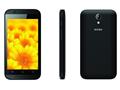
Intex on Thursday launched the Aqua 4X smartphone, priced at Rs. 2,999, which will be exclusively sold via ecommerce site eBay.
The new Intex Aqua 4X smartphone features 3G connectivity, which is also the highlight of the device at this price.
It runs the dated Android 4.2.2 Jelly Bean out-of-the-box and offers dual-SIM (GSM+GSM) support. The Aqua 4X comes with a 4-inch display with a WVGA (480x800 pixels) resolution. A dual-core MediaTek (MT6572) processor powers the smartphone, clocked at 1GHz coupled with 256MB of RAM.
The new Aqua 4X from Intex sports a 2-megapixel rear camera without LED flash, while there is a 0.3-megapixel front-facing camera also onboard. It comes with 512MB of inbuilt storage, and can be expanded up to 32GB via microSD card. Apart from 3G support, the smartphone includes Bluetooth, Wi-Fi, GPS/ A-GPS, and GPRS/ EDGE connectivity options as well.
It is backed by a 1300mAh battery, which according to the online retailer's listing can deliver up to 3 hours of talk time and 180 hours of standby time. The Intex Aqua 4X smartphone is currently available in Black colour only on eBay.
Commenting on the launch, Sanjay Kumar Kalirona, Business Head, Intex Mobiles said, "The Aqua 4X will be the lowest priced 3G phone in a 4-inch category, making it a pertinent phone for consumers across all age groups."
The newly announced Intex Aqua 4X will be up against some stiff competition fromCelkon Campus A35K, which was launched in June at the same price point. However, the Campus A35K runs an updated Android 4.4 KitKat OS when compared the Aqua 4X.
Earlier this month, the company launched the Aqua Style Mini smartphone, priced at Rs. 4,800. The highlight of the Aqua Style Mini handset was the 4-inch WVGA (480x800 pixels) Samsung AMOLED display.
Last month, the company launched its first Firefox OS smartphone in India, the Cloud FX, priced at Rs. 1,999. The handset was touted as the 'most affordable smartphone'.
Intex Aqua 4X

Intex Aqua 4X

Display

4.00-inch

Processor

1GHz

Front Camera

 0.3-megapixel

Resolution

 480x800 pixels

RAM

 256MB

OS

 Android 4.2.2

Storage

512MB

Rear Camera

2-megapixel

Battery capacity

1300mAh


In our weekly series on the world of crowdfunding, we look for the most interesting and exciting projects on sites like Kickstarter and Indiegogo. We're on the lookout for the next big thing in tech like the Pebble smartwatch or the Oculus Rift, and while everything won't be the next game-changer, there's usually something that's cool, or at least fun - and this week's find fits that description.
Today, having your phone run out of charge is such a common problem that everyone's learned to keep a power bank handy - but of course, you've got to remember to charge the power bank, just the way you have to charge the phone.
If your phone and power bank are both out of juice, then you're powerless to do anything about the problem. That's where the Oivo charger comes in.
This little keychain fob-sized accessory is actually two pieces of a charging plate held together with strong neodymium magnets. You can pry the pieces apart, and fit four-AA batteries in between, to get a battery pack that connects to your iPhone's Lightning port.
There are actually a fair number of chargers that use AA batteries - this one from Verbatim is available online for $12.39 - approximately Rs. 750. The four batteries can add up to eight hours of talk time, and unlike power points or USB ports, AA batteries can be bought pretty much anywhere, making this type of charger useful in a real world scenario. It is wasteful - the batteries will be thrown away, and you'll spend Rs. 120 if you're buying Duracell; but if you're on the road and don't have a charging point handy, you can at least get your phone running.
What sets the Oivo apart from other AA battery chargers is its small size. The other chargers of this sort are all large chambers with a USB port - you end up having to carry something that is as big as your iPhone, just to keep it charged. At least the rechargeable power banks are getting slimmer these days.
The Oivo does away with the chamber to hold the batteries in place, and replaces it with strong neodymium magnets - the two contact plates are cut into wedges that fit together to make a nice looking keychain, but can be pried apart to hold the batteries tightly when needed. The small size means that the Oivo will always be with you, unlike other battery power packs whose extra bulk makes them less likely to fit in a pocket.
You can see the full pledge video below:

The team is trying to raise $50,000 by October 3, and for a pledge of $39, you will get one Oivo charger. We're quite enthusiastic about this little charger, and the team says that after the iPhone version is launched, if there is enough demand, it will also make a version with a Micro-USB, so Android and Windows Phone users might be able to get this too.


The HTC-made Nexus 9 tablet has seemingly been confirmed, if a reported lawsuit document by Nvidia against Samsung and Qualcomm is to be believed. Nvidia is said to have accidentally revealed the HTC Nexus 9 tablet name in the legal document, alongside its expected release time frame.
The Nvidia legal document was posted on the company's site (it has since been removed), and was spotted by a blog called the Bright Side of News. The document reportedly states, "the HTC Nexus 9, expected in the third quarter of 2014, is also expected to use the Tegra K1."
While the third quarter release for HTC Nexus 9 seems unlikely, HTC on Wednesday has sent out invites for an October 8 event in New York. Although the invite doesn't reveal anything, it suggests a smartphone and shows two women seemingly capturing a selfie, along with the tag line 'double Exposure'.
The alleged HTC Nexus 9 is anticipated to come with Android L - which has been rumoured to be named Android Lemon Meringue Pie (LMP). The purpoted specifications were recently leaked in an AnTuTu benchmark listing pointing towards an LTE variant alongside the expected Wi-Fi only variants.
The alleged listing with name 'Google Nexus 9' showed the tablet running on an Nvidia Tegra K1 Denver processor, which is a 64-bit chip - ideal for the upcoming Android L release. The display resolution was listed as Quad-HD (1440x2560 pixels), for the rumoured screen size of 8.9-inch or 9-inch, as learnt from the previous leaks. The AnTuTu benchmark results also revealed a score 45,923, which as per the test's rating system is 'Amazing' performance for a tablet device.